Rectangular Window Product Box as a Strategic Packaging Asset
The Rectangular Window Product Box isn’t just a container—it’s a deliberate communication tool bridging physical protection and visual storytelling. When you strip away the excess, the value lies in how a single structural decision—integrating a transparent viewing window—can reshape buyer perception, reduce friction in retail environments, and support smarter product presentation without inflating costs or complexity. This article unpacks what the template genuinely offers, where it fits into a packaging strategy, and how to move from simply using a dieline to making it work for your goals, brand, and long-term results.
What Makes the Rectangular Window Product Box Different
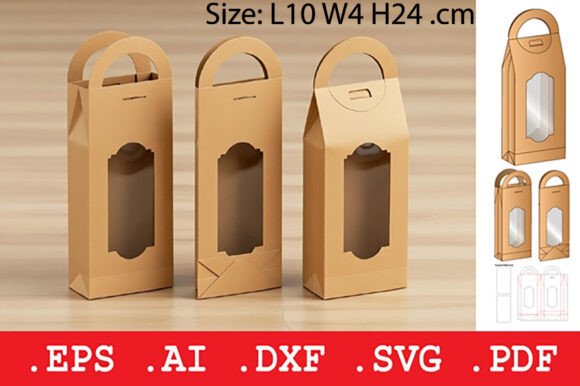
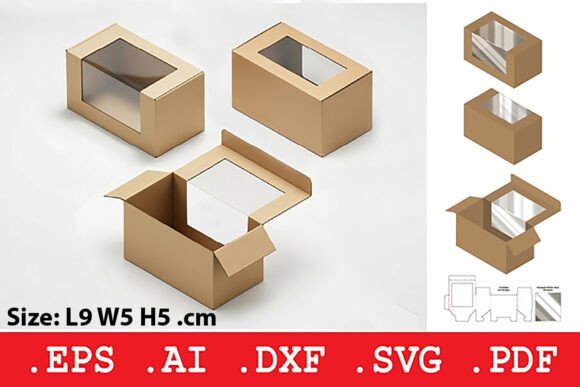
At its core, this packaging template combines a clean rectangular form with a large integrated window, sealed by a transparent plastic sheet. It is designed for 200-350 gsm paper, which gives it enough rigidity to hold its shape while remaining easy to fold by hand or machine. Unlike rigid setup boxes, it’s a non-rigid folding carton, relying on a standard tuck-end or locking-tab closure that requires no adhesive. The precision dieline includes the window cutout and the plastic insert placement, so manufacturing becomes a straightforward process of printing, cutting, creasing, and inserting the window material.
The strategic leap comes from that window. It lets you eliminate the guesswork for the buyer. Instead of relying solely on box imagery, the actual product becomes part of the visual hierarchy. For items where texture, color, shape, or finish drive purchase decisions—handmade soaps, artisan candles, small electronics, cosmetics, gourmet chocolates—the ability to show the product without compromising protection shifts the packaging from a cost center to a silent salesperson. The standard format also simplifies logistics: stacking, storage, and line setup are predictable, which means fewer surprises during production runs or last-minute order spikes.
When a Viewing Window Becomes a Strategic Choice
It’s tempting to add a window just because it looks premium. However, the real advantage appears when you align the transparent panel with a specific communication or customer experience goal. Ask yourself: what would a buyer lose by not seeing the product before opening? If the answer touches on trust, appeal, or time savings, the Rectangular Window Product Box likely serves more than aesthetic taste.
Building Trust Before the Unboxing
Visual access lowers a psychological barrier. When customers can verify the item matches its description—color accuracy, component count, or finish—you reduce return rates and increase confidence at the point of sale. This is especially valuable in marketplaces where reviews hinge on whether expectations match reality. The window acts as a form of pre-purchase transparency, signaling that you stand behind what’s inside. For a small electronics accessory, seeing the actual connector or texture assures the buyer it’s the right fit without unpacking and repacking hassles.
Enhancing In-Store and Digital Shelf Impact
In physical retail, a window cuts through visual noise. The product breaks the monotony of printed graphics, creating a focal point that draws the eye. On e-commerce product pages, a well-photographed window box helps convey depth and tangibility in a 2D image—especially when the product is slightly angled behind the film, catching natural light. This isn’t just about looking “nice”; it’s about accelerating purchase decisions by answering the unspoken question, “What am I really getting?” faster than a competitor’s opaque box.
Operational and Branding Advantages Hiding in Plain Sight
The practicality of the Rectangular Window Product Box extends well beyond the display shelf. Its construction choices directly affect production efficiency, shipping damage rates, and how your brand is experienced during disposal or recycling.
- Adhesive-free assembly: Tuck-end or locking-tab closures remove the need for glue, speeding up manual packing or allowing simpler automation. You also avoid the environmental and cost considerations of additional adhesives, which can simplify compliance with certain sustainability standards.
- Paper weight flexibility: The 200-350 gsm range gives you room to dial in the right feel. Lighter weights keep material costs and shipping weight low for high-volume items; heavier stocks convey greater substance for premium gifts without entering rigid-box expense territory.
- Predictable dieline consistency: Because the structural design is proven and standardized, you spend less time on prototype iteration. The packaged dieline (included as .EPS, .AI, .DXF, .SVG, .PDF) means your printer or manufacturer can move directly to plate-making or laser cutting, reducing lead time and the risk of custom design errors.
From a branding perspective, the large flat surfaces around the window remain your canvas. You’re not losing branding real estate; you’re rearranging it. The window forces more intentional use of negative space, typography, and color blocking around the cutout. This often results in cleaner, more modern layouts that stand apart from fully printed boxes struggling to say everything at once.
Practical Scenarios Where the Window Box Shines
You don’t need a revolutionary product to benefit; you need a product that gains perceived value when its physical attributes are visible. Experience shows that the following categories consistently turn a window into a measurable lift in engagement or conversion.
Cosmetics and Personal Care
A lipstick, eyeshadow palette, or skincare jar lives or dies by color and texture. A Rectangular Window Product Box lets the shade speak for itself, reducing the need for exaggerated color-matching in print. Buyers also instinctively know the product hasn’t been tampered with—the visible seal through the window offers a subtle security cue. For gift bundles, arranging multiple items behind a single large window creates a curated collection feel without increasing the box’s footprint.
Small Electronics and Accessories
Cables, earbuds, phone cases, or smart sensors benefit from an “honest reveal.” Showing the actual finish—matte, glossy, or textured—prevents the disappointment of a misleading rendering on the box. For B2B purchases like sample connectors or adaptors, the window allows quick visual verification without opening each unit, saving time during inventory checks or at tradeshow booths.
Gourmet Food and Artisan Gifts
Cookies, chocolates, tea sachets, or hand-poured candles appear more appetizing and handcrafted when partly visible. The window can also be shaped strategically to highlight a specific element, like a logo-embossed chocolate or the candle’s unique layering. This moves the packaging from generic food box to storytelling vehicle—the product itself becomes the hero image.
Planning Your Layout Around the Window
Before sending files to production, think through how the transparent area and the printed surfaces interact. The most common mistake is designing the graphics first and then punching a window through them, which often severs key visual elements or leaves awkward cut-off text.
A better approach: start with the dieline. Define the window’s exact position and size based on what product feature matters most. Then build the graphic composition outward, using the window as a hard border. Fonts, patterns, and logos should flow around it, not into it. The plastic insert—typically clear PET or PVC sheet—will reflect some light, so test your design with a mockup under different lighting to ensure that any text near the window remains legible and doesn’t compete with the product’s shape.
Also consider the inner structure. If the product can shift during transit, it might rotate away from the window, defeating the purpose. Invest in a simple insert, a fitment, or a tray made from the same paper stock to hold the item in place. The pdf and vector files included with the template make it easy to add a secondary dieline for internal components without reinventing the outer box.
Matching the Box to Your Broader Packaging Strategy
The Rectangular Window Product Box shouldn’t exist in isolation. It works best when it aligns with how you want customers to perceive your entire line. If your brand identity relies on minimalist, unboxing-as-experience principles, a window aligns naturally because it reduces the “layers of hiding.” If you’re positioned as an eco-conscious maker, the adhesive-free construction and the ability to use recyclable paper and bio-based window films can reinforce that message.
From an inventory standpoint, committing to one standardized structural shape with optional window placements can drastically simplify your SKU complexity. You might run different print designs on the same dieline, swapping graphics for seasonal editions without requiring new cutting dies. The included .DXF format is especially useful here if you’re working with CNC knife cutting tables, as you can nest multiple variations quickly and test them on board before committing to a full offset run.
File Formats as Strategic Enablers
The template’s value multiplies when you understand why specific file types are included and how to use them beyond simple printing.
- .EPS (Standard Vector): Industry lingua franca for professional printing. Almost any commercial printer, whether using offset, digital, or flexo, can accept it. Use this when sourcing quotes—it ensures consistent output without font or layer conflicts.
- .AI (Adobe Illustrator Source): Your creative sandbox. This is where you customize the dieline, adjust window size, add branding, and separate layers for cutting, creasing, and printing. Retain this as your master file for future revisions.
- .DXF (CNC/Laser Compatible): If you’re prototyping in-house or working with a maker space, this format allows you to cut and score sample boxes on a laser cutter or CNC machine. Testing a physical prototype in an hour clarifies window placement, assembly time, and product fit more than any screen mockup.
- .SVG (Scalable Vector): Ideal for digital proofing and smaller craft cutters (Cricut, Silhouette). It’s also increasingly used in web-based packaging configurators. Designers can quickly share window box concepts in a browser without requiring full Adobe software.
- .PDF (Print-Ready Document): A universal reference. Use this for manual cutting, for sharing with team members to get feedback, or as a low-barrier format to show stakeholders exactly what the final outline looks like. Print it on letter-sized paper, cut and fold by hand, and you’ll have a scaled prototype in minutes.
Being deliberate about which format you use at each stage moves you from a wait-and-hope supplier dynamic to a collaborative, informed process. You can prototype internally, validate, and then hand off production-ready .AI or .EPS files with clear specifications, minimizing costly proofing rounds.
Common Pitfalls and How a Strategic Lens Avoids Them
Even the best template can lead to underwhelming results if deployed without clear intent. Recognizing these risks helps you use the Rectangular Window Product Box intentionally rather than randomly.
Window without purpose: A large cutout that reveals only a generic part of the product—like the flat back of a jar—adds nothing. The window should expose the most distinctive feature. If the product has no “best side,” consider whether an opaque box with exceptional printing could do a better job. Don’t default to a window just because it’s available.
Neglecting protective film quality: The transparent insert isn’t an afterthought. Low-grade film can cloud, scratch, or warp, cheapening the entire presentation. Choose a film thickness and clarity that aligns with the product’s price point and shelf life expectations. For food items, ensure the material is food-safe and tested.
Designing in a vacuum: Graphics created without a physical test often clash with the window’s real-world light reflection or the actual product color underneath. Always produce a prototype using the .SVG or .DXF on your intended paper stock, insert the product, and view it under typical retail or studio lighting. Adjust contrast and background colors accordingly.
Overcomplicating assembly: If the locking-tab closure feels too tight or the tuck flap comes loose, it erodes perceived quality. The template is optimized, but variations in paper thickness and grain direction matter. Test on your final chosen stock—don’t assume the dieline translates perfectly to every sheet without minor scoring depth adjustments.
Using the Rectangular Window Product Box to Strengthen Long-Term Results
Strategic packaging is rarely about a single box; it’s about building operational consistency and brand memory. When you adopt this window template as part of a broader system, you create a recognizable format that customers associate with your quality and transparency. Over time, that consistency reduces decision fatigue—both for you during new product launches and for buyers scanning crowded shelves.
Consider adding the dieline to your packaging playbook as a repeatable asset. When introducing a new variant or limited edition, you can skip the structural design phase and go straight to customizing the surface graphics, pouring energy into communicating seasonal stories instead of reinventing the box itself. This accelerates speed-to-market and frees up creative resources for higher-value differentiation, like inserts, unboxing surprises, or personalized notes.
From a sustainability perspective, the adhesive-free design and the ability to separate the window film from the paperboard during recycling (with proper consumer guidance) can support your environmental narrative. It’s not greenwashing; it’s about choosing a structure that genuinely simplifies recovery. Pair that with a recyclable window film option and you’ve turned a simple carton into a statement of values.
Making the Decision: Is This Template Right for Your Next Move?
Instead of adopting the Rectangular Window Product Box as a default, treat it as a hypothesis. Ask: If we add a window, will the customer’s confidence increase? Will the product’s perceived value rise measurably? Can we maintain consistent product positioning inside during transit? If the answers lean toward a clear yes, the template provides a fast, reliable path to execution. If the answers are uncertain, start with a single SKU test, measure feedback and return rates, and then decide whether to expand.
The included file set makes low-risk experimentation possible. Use the .DXF to cut a handful of beta samples. Send them to trusted customers, or place them in a small retail test. Observe how people interact. Do they pick up the box? Do they rotate it, peering through the window? Do they comment on the transparency? Real-world behavior often reveals more than any focus group, and the cost of testing with this dieline is minimal compared to custom structural engineering.
Ultimately, the Rectangular Window Product Box earns its place when it solves a real problem—reducing buyer uncertainty, speeding recognition, or reinforcing brand integrity. It’s not about following a trend; it’s about equipping your product with the quiet advantage of being seen exactly as it is, without having to be opened and possibly damaged. In a marketplace saturated with promises printed on cardboard, that direct visual honesty often makes all the difference.