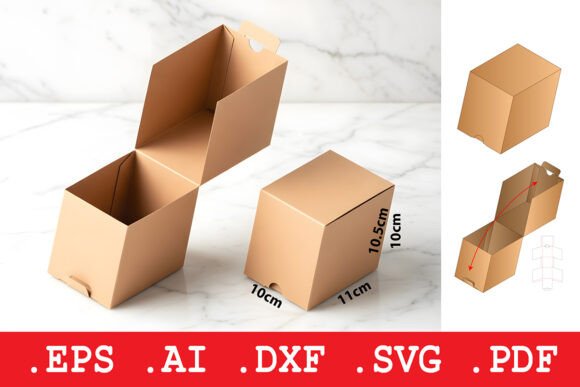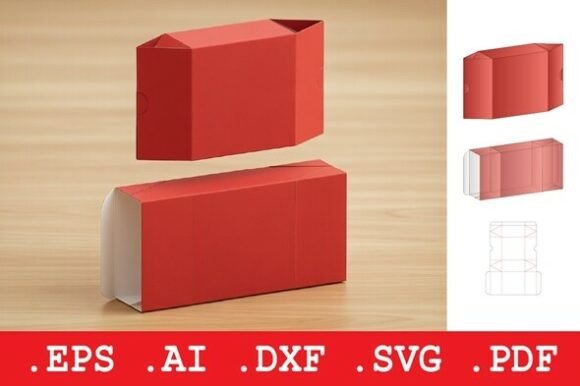
Unlock Modern Packaging with the Hexagonal End Cap Rectangular Box
In the competitive world of product presentation, the container itself can be your most powerful marketing tool. The Hexagonal End Cap Rectangular Box offers a distinctive solution, blending the practical stability of a rectangular body with the dynamic, contemporary lines of tapered hexagonal ends. This isn't merely a box; it’s a structural statement. Its sleek geometric silhouette immediately communicates quality and innovation, making it a compelling choice for anyone looking to elevate cosmetics, boutique electronics, artisan goods, or premium gift items from ordinary to exceptional.
The Pitfalls of Misunderstanding Materials and Assembly
A common, costly mistake is treating this sophisticated dieline like a standard rectangular box. Its unique side-insertion flap closure system, designed for a secure friction-fit, requires specific attention. Using material outside the recommended 200–350 gsm cardstock range is a primary error. Beginners might opt for a lighter 180 gsm paper to save cost, resulting in a flimsy structure where the hexagonal end caps lose their crisp definition and the friction-fit fails, causing the box to pop open or collapse. Conversely, a heavy 400 gsm board can make the side flaps difficult to insert smoothly, leading to torn edges during assembly and a frustrating experience for the end user.
The practical correction is straightforward: always test your material first. Before committing to a full production run, print and assemble a single box from your chosen cardstock. Check the tactile feedback: the flaps should slide in with firm but manageable resistance and hold securely without glue. This simple prototype step prevents wasted resources and ensures the structural integrity that makes the Hexagonal End Cap Rectangular Box so effective.
Choosing the Wrong File Format for Your Process
Another overlooked detail lies in the included file suite (.DXF, .SVG, .EPS, .PDF, .AI). Selecting the incorrect format for your manufacturing or design workflow can introduce errors and delays. For instance, sending the .PDF file to a CNC or laser cutting service is a typical misstep. While the .PDF is excellent for manual cutting and viewing, it is not inherently optimized for machine toolpaths. The professional approach is to use the .DXF file for CNC/laser hardware, as it contains clean, precise vector paths machines interpret perfectly. Similarly, using the .EPS for digital design software like Affinity Designer might require conversion steps, whereas the native .SVG file would integrate seamlessly.
Always match the file to your tool. For industrial printing, provide the .EPS. For full customization in Adobe Illustrator, start with the .AI source file. This attention to technical details guarantees the geometric precision of the hexagonal ends is maintained from your screen to the physical product.
Ignoring the Shelf Impact and User Experience
Creators often focus solely on the box's aesthetics during design but neglect its in-hand and on-shelf performance. The hexagonal end caps are not just for looks; they create a natural gripping surface and a memorable shape that stands out in a linear row of standard boxes. A mistake is to overwhelm this elegant geometry with excessively busy graphics that clash with its clean lines. The better approach is to design with the shape as a collaborator. Use the large rectangular panels for bold branding, but let the tapered hexagonal ends breathe with simpler patterns or even remain a contrasting solid color to accentuate the form.
Furthermore, consider the unboxing. The friction-fit closure should offer a satisfying, secure opening experience—not a struggle. If your assembly test revealed the flaps are too tight, subtly scoring the fold lines on the inside face of the flap can ease insertion without compromising hold. This small refinement enhances customer satisfaction, turning packaging into a positive part of the product journey.
Underestimating the Value of Customization
The provided .AI source file is a gateway to true innovation, yet many non-designers shy away from it, sticking to the pre-formatted .PDF. This limits potential. The Hexagonal End Cap Rectangular Box template can be adapted. For example, you might need a slightly taller box for a taller product. Altering the rectangular body height in the source file is simple, but you must then also proportionally adjust the side-insertion flap length to maintain the correct closure—a detail easily missed. Another advanced customization is adding small internal tabs or dividers within the .AI file to create compartments for multi-item sets.
If you're not a Illustrator expert, a realistic solution is to hire a freelance packaging designer for a few hours to execute your specific modifications on the source file. This investment unlocks the template's full potential for your unique needs, ensuring a perfect fit for your product while retaining all the original design’s benefits.
Final Checks Before Commitment
Before finalizing your decision to use the Hexagonal End Cap Rectangular Box, conduct a holistic review. First, verify your product’s dimensions against the box’s internal space, remembering the tapered ends reduce volume slightly at the extremes. Second, confirm your printer or cutter’s file format requirements to avoid production hiccups. Third, physically assess your chosen material’s finish; a textured or coated cardstock can affect the friction-fit's performance, so a prototype is essential. Finally, think through the entire user journey: from shelf appeal to storage to unboxing. Does this design align with your brand's story and your customer's expectations?
This packaging template is a powerful tool that blends modern design with practical function. By avoiding the common mistakes of material misselection, file format confusion, and design oversight, and by embracing thorough testing and thoughtful customization, you can harness the full power of the Hexagonal End Cap Rectangular Box. It will not only protect your product but also elevate its presence, communicate its value, and deliver an experience that resonates long after purchase.