Magnetic Rigid Box with Support Insert: The Premium Packaging Solution for Professional Presentation
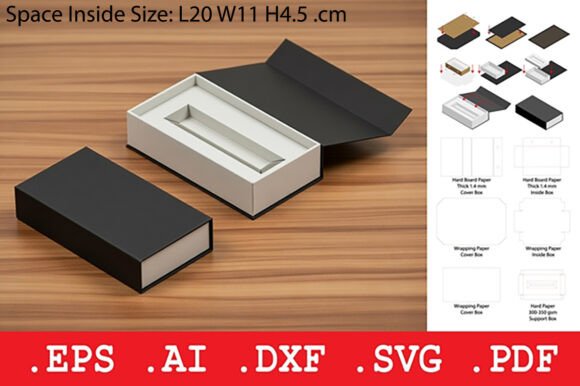
When your product deserves a stage worthy of its quality, packaging becomes more than just a container—it’s the first tactile interaction a customer has with your brand. The Magnetic Rigid Box with Support Insert is precisely engineered for this moment. This isn't a standard folding carton; it's a substantial, non-folding setup box constructed from high-density rigid hardboard chipboard. Its defining feature is the flip-top lid secured by a magnetic closure, providing that satisfying click and a sense of durable luxury. Internally, a custom support insert acts as a cradle, specifically designed to protect and display delicate items like high-end electronics, luxury pens, or fine jewelry. The final appearance is achieved by wrapping decorative art paper over this thick board base, resulting in a seamless, polished finish that speaks volumes in a retail environment.
Overlooking the Structural Commitment of a Non-Folding Box
A common initial misunderstanding is treating this packaging like a typical box. Because it's a non-folding setup box, it doesn't arrive flat-packed for assembly. The structure is permanently formed from the thick board. This means your production process is different. A mistake many beginners make is underestimating the importance of the provided digital files. The included .DXF files contain precision cut lines for industrial CNC or laser cutting of that thick board—they are not for casual desktop printers. Attempting to improvise the cutting or material can lead to misaligned lids, weak magnetic closure points, or an insert that doesn't fit snugly, compromising both protection and the premium feel.
Practical Advice: Before sourcing materials or a cutter, confirm your manufacturer or workshop can accurately process .DXF files for thick board. Verify the board density and thickness matches the design's requirements; a softer board will feel cheap and may not hold the magnetic closure effectively. Use the accompanying .PDF as your manual assembly guide to understand the physical construction before you begin.
Misjudging the Role of the Support Insert
The internal support box is not merely a spacer; it is a functional component of the product experience. An overlooked detail is its dual purpose: security and presentation. A mistake occurs when people design the insert purely for logistics, creating a tight, functional clamp that makes removing the product difficult or ungraceful. For a luxury item, the unboxing should be a smooth, elegant reveal. Conversely, an insert that’s too loose or shallow allows the item to shift, risking damage and creating an impression of carelessness.
A Better Approach: Utilize the .AI (Adobe Illustrator) file for full customization of the insert structure. Think about the user's journey: How will they lift the item out? Can the insert be designed to subtly angle the product for better visibility upon opening? Prototype using the exact materials. For a set of jewelry, for example, a softly contoured foam bed under a satin cover can be more appealing and secure than a simple rectangular cavity.
Underestimating the Finish: Art Paper Application
The seamless retail appearance comes from wrapping decorative art paper over the rigid base. A frequent error here is choosing paper based only on aesthetics, neglecting its physical properties. A thin, uncoated paper can tear during application or wear quickly at the lid's hinge point. Another misunderstanding is assuming the wrapping is a simple step; it requires precision to align graphics and ensure crisp, unwrinkled edges over the thick board's corners. Poor application immediately downgrades the box from premium to amateurish.
What to Check: Select art paper with appropriate weight and a finish (like laminate or coating) that can withstand handling and the wrapping process. The .EPS and .SVG files are your allies here. Use the .EPS for high-resolution printing of your branded graphics, as it maintains quality at scale. The .SVG files are excellent for digital layout and plotting, helping you visualize how your design wraps around the 3D structure before you commit to print. Always request a physical proof wrapped on a dummy board to check color alignment and edge integrity.
Choosing the Magnetic Rigid Box for the Wrong Product Scale
This packaging solution excels with small, high-value items. A costly mistake is trying to adapt it for larger, heavier products. The magnetic closure and flip-top lid are designed for a specific scale and weight balance. Using it for a heavy electronic device could result in a lid that sags or a magnet that feels insufficient, breaking the sensory promise of "secure and tactile." Furthermore, the cost of the thick board and custom insert rises significantly with size, making it an inefficient choice for mid-range, bulky items.
Realistic Evaluation: Honestly assess your product's value, size, and weight. The Magnetic Rigid Box with Support Insert is ideal for items where the packaging cost is justified by a significant boost in perceived value and customer experience. For a boutique watch or a limited-edition collector's item, it’s perfect. For a standard accessory or a product sold primarily online with minimal physical retail presence, a simpler box might be more cost-effective and still appropriate.
Final Considerations Before You Commit
Embracing this premium packaging requires a holistic view. First, integrate all the provided files—.DXF, .AI, .EPS, .SVG, .PDF—into your workflow from design to production. They are a complete toolkit, not just optional extras. Second, calculate the total unit cost including board cutting, insert fabrication, art paper printing, wrapping, and assembly. This is often a manual or semi-manual process, so volume estimates are key. Third, think about the unboxing narrative. Does the magnetic closure create a moment of anticipation? Does the support insert present the product in its best light? Your answer should be yes.
By understanding the structural realities, customizing the insert with purpose, selecting and applying finishes meticulously, and matching the box to your product’s true scale, you unlock the full potential of the Magnetic Rigid Box with Support Insert. It moves from being just a container to becoming a coherent, physical expression of your brand’s quality and attention to detail, creating an experience that customers remember and value.