Unlocking Convenience: The Versatile Folding Food Box with Locking Lid
In the bustling world of food service and creative entrepreneurship, packaging is rarely just a container. It's a crucial part of the customer experience, a tool for brand expression, and a practical solution for logistical challenges. The Folding Food Box with Locking Lid is a standout example of design meeting function, a packaging template engineered to solve real problems across a surprising range of scenarios.
What Exactly Is This Packaging Template?
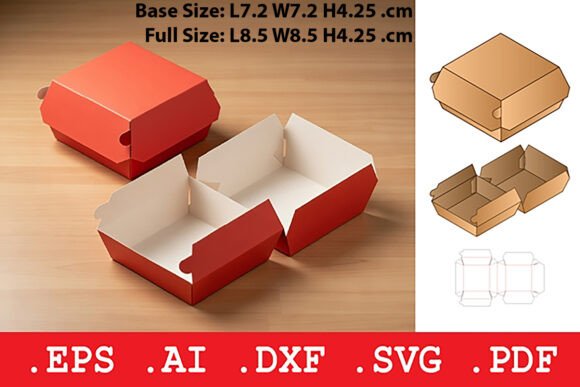
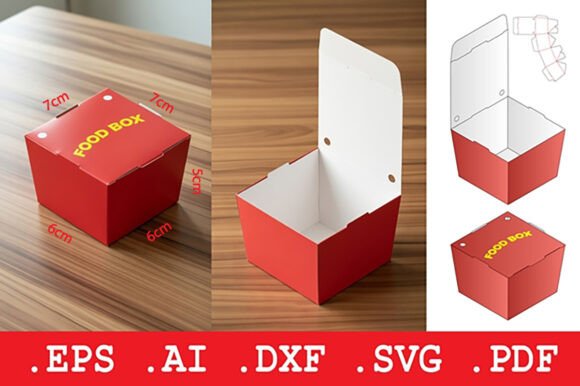
Think of it as a ready-to-build blueprint for a superior takeaway container. This isn't a generic box; it's a professional-grade design specifically crafted for 180-350 GSM paperboard, the sturdy material often used for high-quality food packaging. The hallmark features are its high-back flip lid that securely closes with dual locking tabs and thoughtfully integrated ventilation holes. These aren't minor details. The locking lid prevents spills and maintains freshness, while the ventilation allows steam from hot foods to escape safely, preventing soggy disasters. Furthermore, its tapered base isn't just for looks—it provides exceptional structural stability and allows boxes to stack neatly, a critical factor for busy kitchens or transport.
But here’s the key: you receive it as a set of digital files (.DXF, .SVG, .EPS, .PDF, .AI), not a physical product. This means it's a template for creation, allowing businesses, makers, and designers to produce these boxes themselves using CNC cutters, laser cutters, or even professional print services, customizing the material, size, and branding to their exact needs.
Real-World Scenarios: Where This Box Makes a Difference
The utility of the Folding Food Box with Locking Lid shines in specific situations where common packaging fails.
The Hot Takeaway Challenge
Imagine a gourmet burger joint, a specialty fried chicken shop, or a restaurant known for its steaming curries. Standard containers can warp, leak condensation, or become difficult to handle. This box's ventilation holes manage heat and moisture, while the locking lid ensures that saucy, juicy meals arrive intact. The stability means it won't buckle under the weight of a hearty meal, and the stackability lets staff prep multiple orders efficiently. For the customer, it's a secure, premium experience that elevates the simple act of takeaway.
Artisan Bakery & Delicate Pastries
For bakeries selling delicate croissants, layered napoleons, or fragile tartlets, packaging is a protector. The rigid paperboard construction offers crush resistance, while the secure lid prevents items from sliding out. A bakery can use a slightly lighter GSM board for lighter items, customizing the feel. The box itself becomes part of the presentation—a beautiful, branded container that feels special, enhancing the perceived value of the artisan product inside.
Gourmet Snacks & Subscription Services
Companies delivering premium cheeses, curated charcuterie selections, or specialty confections need packaging that travels well and stores neatly. The locking lid is perfect for items that might be opened and closed repeatedly, and the stackable design is ideal for fulfillment centers packing multiple boxes into larger shipping containers. For a subscription service, this consistency and reliability in packaging builds trust and a professional brand image.
The Creative Maker & Small Batch Producer
Beyond commercial food service, this template empowers small-scale creators. Someone making handmade chocolates for a local market, selling custom-decorated cookies online, or starting a small-scale granola business can access professional-grade packaging without enormous upfront costs. Using the .PDF for manual assembly or the .SVG for a craft plotter, they can produce small batches that look and function like those from large companies, helping them compete on quality and presentation.
Considering Your Needs Before Diving In
While the Folding Food Box with Locking Lid template is versatile, its effective use depends on a few practical considerations.
The first is your access to production. The template files are designed for digital cutting hardware (CNC, laser) or professional printing. If you lack access to such equipment, you'll need to partner with a packaging supplier or print shop that can utilize these vector files. The .PDF allows for manual cutting and assembly, but this is only feasible for very low-volume, craft-oriented projects.
Material choice is critical. The 180-350 GSM paperboard specification means you need to source board within that thickness range. Heavier board (350 GSM) offers maximum rigidity for heavy, hot foods, while lighter board (180 GSM) might be more economical for dry, lighter snacks. You must also consider if the paperboard is food-grade and suitable for direct contact with your product.
Customization is a major strength but requires design skill. The .AI (Adobe Illustrator) source file allows for full modification of graphics, sizing, and potentially even slight structural tweaks. This is perfect for businesses wanting to incorporate unique logos, patterns, or instructional text. However, if you lack graphic design expertise, you might stick with the base template and focus on adding a simple printed label.
Strengths and Natural Limitations
Its strengths are clear: security from the locking lid, safety from the ventilation, logistical efficiency from stackability, and professional adaptability from the vector file formats. It solves the specific pain points of hot, moist, delicate, or premium food items.
Potential limitations are equally practical. It is a rigid paperboard box, not a flexible bag or a transparent container. If your primary need is visibility of the product (like for a salad bar), this might not be the best fit. Also, while the tapered base aids stability, it does mean the internal volume is slightly pyramidal; for completely flat, layered items, this could be a minor consideration. Finally, as a template, it requires an additional step of production—you are not buying ready-made boxes, but the means to make them. This offers control and customization, but also adds a layer of complexity compared to ordering stock containers.
How Different Users Benefit in Different Ways
A restaurant owner benefits from operational efficiency (stacking, secure closing) and enhanced customer satisfaction. A graphic designer working for a food brand benefits from the clean, industry-standard vector files (.EPS, .AI) that integrate seamlessly into brand packaging projects. A small-scale artisan food maker benefits from the ability to create a high-end look without a high-end budget. An operations manager at a meal delivery service benefits from the reliability and structural integrity during transport. Each user leverages the same core template, but for a purpose aligned with their unique goals.
Ultimately, the Folding Food Box with Locking Lid template represents a shift from passive packaging to active tool. It's a design that acknowledges the messy, mobile, and demanding reality of how food moves from kitchen to customer today. By providing the blueprint in versatile digital formats, it puts the power to create secure, stable, and professional packaging into the hands of anyone who needs it, from the multinational franchise to the home-based baker, unlocking convenience in more ways than one.