Hexagon Teacup and Saucer Gift Box Design Guide
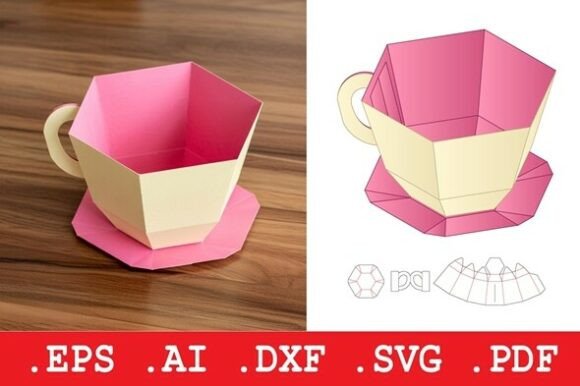
Packaging often sets the tone before a gift is even opened. The Hexagon Teacup and Saucer Gift Box takes that moment further by turning the container itself into part of the experience. Instead of a standard square box or a generic bag, this design presents a faceted teacup shape resting on a matching saucer—both constructed from precisely cut paper sheets. It holds small items securely while doubling as a decorative object that recipients tend to keep long after the contents are gone.
What makes this template stand out is its thoughtful engineering. The hexagonal cup body forms clean geometric lines that catch light differently from every angle. The saucer isn't just a flat disc—it mirrors the angular theme and provides a stable platform. Together they create a cohesive look that suggests care and attention to detail, qualities that resonate whether you are packaging specialty tea blends, artisanal chocolates, wedding favors, or small corporate gifts.
What the Hexagon Teacup and Saucer Gift Box Actually Is
At its core, this is a digital cutting and assembly template. You receive vector-based files that tell your cutting machine, printer, or scissors exactly where to cut, score, and fold. The result is a three-dimensional paper structure comprising two main components: a cup-shaped container with an integrated handle and a shallow saucer base. Interlocking tabs hold the handle firmly against the cup body, while a separate base piece slots into the bottom of the cup to create a floor for contents.
The hexagonal shape is deliberate. Six flat sides give the cup presence without making it overly complex to assemble. Each facet provides a canvas for decoration—whether you keep it minimal with solid cardstock or add patterns, foil accents, or branding. The saucer echoes this geometry, creating visual harmony when the two pieces are displayed together.
File Formats and What They Mean for Your Workflow
The template arrives as a collection of five file types, each serving a distinct purpose in the making process. Having multiple formats means you aren't locked into one software ecosystem or fabrication method.
- .EPS – The standard vector format preserves every line, curve, and node with precision. Ideal for sending to professional print shops or importing into older design applications without compatibility concerns.
- .AI – The native Adobe Illustrator file lets you customize colors, add text, resize elements, or adjust cut and score lines before production. This is your starting point if you plan to brand the box for a client or event.
- .DXF – Universally recognized by CNC routers and laser cutters. If you work with a maker space, a fabrication lab, or own a desktop laser such as a Glowforge or xTool, this file speaks your machine's language directly.
- .SVG – Scalable and lightweight, SVGs play nicely with digital design tools like Inkscape, Cricut Design Space, and Silhouette Studio. Hobbyists and crafters often reach for this format first because of its broad software support.
- .PDF – A print-ready document you can send straight to a standard desktop printer. Useful for quick prototypes, testing paper weights, or hand-cutting with a craft knife when you prefer a manual approach.
Choosing the Right Paper Stock
The template is optimized for paper weights between 180 and 350 gsm. That range covers a lot of ground, and where you land depends on your desired outcome. At the lighter end, around 180–220 gsm, the box folds crisply and works well for one-time event use—think wedding favors or party settings where cost and ease matter. The structure still holds its form, though the cup walls may feel slightly flexible.
Moving into 250–300 gsm territory gives you a noticeably sturdier result. The hexagon facets stay rigid, the handle resists bending, and the saucer supports more weight without warping. This is the sweet spot for retail-ready packaging or gifts meant to be kept and reused. At 350 gsm, you approach cardstock that behaves almost like thin board. Cuts need to be clean—preferably machine-made—but the final piece has a substantial, premium feel that communicates quality before the recipient even lifts the lid.
Surface Textures and Finishing Choices
Paper selection goes beyond weight. A smooth matte stock gives the hexagon tea cup a modern, understated look and takes ink well if you plan to print directly. Textured papers—linen, laid, or felt finishes—add tactile interest and hide minor scuff marks better than smooth surfaces. Metallic or pearlescent papers can make the geometric facets appear to shift in tone as the viewing angle changes, which amplifies the hexagonal design beautifully. If you intend to add foil stamping or embossing, test on a sample first; the faceted design means you'll need to align your embellishment carefully across the flat panels before folding.
Practical Applications Across Different Settings
The flexibility of the Hexagon Teacup and Saucer Gift Box lends itself to a surprising range of uses. Because the template starts as a digital file, you control the material, scale, and finishing—making it adaptable rather than prescriptive.
Boutique Retail and Product Packaging
Small-batch tea sellers, soap makers, and confectioners benefit from packaging that reflects the artisanal nature of their products. A hexagonal teacup box filled with loose-leaf tea sachets or hand-rolled truffles tells a story that a plain kraft box cannot. Customers perceive higher value, which supports premium pricing. The saucer acts as a display tray when the cup is lifted off, so the box performs double duty at point-of-sale displays.
Event and Celebration Favors
Weddings, baby showers, bridal teas, and corporate luncheons all call for small tokens that guests can take home. Filling these hexagonal cups with honey sticks, candied almonds, or seed packets turns a simple favor into a keepsake. The structure holds up through transport and handling, and guests often repurpose the cup as a desk organizer or trinket holder. Event planners appreciate that the unassembled templates ship flat and can be prepared in advance, saving storage space and reducing last-minute stress.
Creative and Educational Projects
Art educators and workshop facilitators use paper engineering templates to teach geometry, design thinking, and fine motor skills. The hexagon tea cup involves folding along straight and angled lines, inserting tabs, and fitting a separate base—all practical exercises in spatial reasoning. Students can decorate the flat panels with drawings, stamps, or digital prints before assembly, bridging two-dimensional creativity with three-dimensional construction. The satisfaction of turning a flat sheet into a recognizable object reinforces learning in a tangible way.
Branding and Marketing Campaigns
Marketers seeking unconventional direct-mail pieces or event giveaways can brand the cup and saucer surfaces with logos, campaign messages, or QR codes. Unlike a flyer or postcard that might be glanced at and discarded, a dimensional paper object invites interaction. People pick it up, turn it over, and examine how it fits together—extending engagement time with your brand. When the cup holds a product sample or a curated tea blend, the sensory experience amplifies the message.
Assembly Tips for a Professional Result
Working with geometric paper constructions rewards patience and precision. A few practical habits make a visible difference in the finished piece.
Score all fold lines before cutting, or use a scoring tool if your cutting machine supports dual-pass operations. Clean scores produce sharp edges along the hexagon facets and prevent the paper from cracking—especially important with heavier cardstocks. When folding, use a bone folder or the back of a butter knife to press creases flat; fingers alone often leave rounded edges that diminish the crisp angular look.
Apply adhesive sparingly to the interlocking tabs. A thin line of tacky glue or a small piece of double-sided tape is usually sufficient. Too much glue warps the paper and can seep out at the seams. For the handle, insert the tabs fully into their designated slots before securing with adhesive, checking that the handle sits perpendicular to the cup body. The base piece should be inserted last, after the cup walls are assembled, so you can press it firmly against the interior floor from inside.
Allow freshly glued assemblies to set under a light weight for a few minutes. This prevents the tabs from lifting while the adhesive cures and ensures the hexagon tea cup sits flush on its saucer without wobbling.
Scaling and Customization Considerations
The digital nature of the template means you can adjust dimensions to suit specific products. Resize proportionally to maintain the tab-and-slot relationships—uneven scaling can misalign the handle connections or cause the saucer to no longer match the cup's footprint. Most vector editing software lets you scale grouped objects uniformly with a single command.
Consider adding a window or aperture to the cup body if your contents benefit from visibility. A die-cut hexagon window on one facet, backed with acetate or vellum, turns the box into a miniature display case. This works well for colorful macarons, bath bombs, or layered tea blends where visual appeal is part of the value.
For branding, set up your artwork on the flat template before assembly. Use the fold lines as guides to position logos and text so they appear centered on each completed facet. Bleed and margin considerations apply here—keep critical elements at least 3 mm away from cut and fold lines to avoid trimming or creasing through important information.
Why This Design Connects with Recipients
There is something inherently pleasing about hexagonal geometry. It appears in nature—honeycomb, basalt columns, snowflakes—and reads as both organic and intentional. The Hexagon Teacup and Saucer Gift Box borrows that visual familiarity and applies it to a functional object. Recipients often pause to admire the structure before opening it, which is precisely the reaction thoughtful gift-givers and strategic marketers hope to elicit.
The teacup form carries its own associations: warmth, hospitality, conversation, comfort. Even when made of paper, the shape evokes those feelings. Pairing the cup with a saucer completes the illusion and makes the packaging feel intentional rather than gimmicky. This emotional resonance adds perceived value, whether you're giving a small gift to a friend or presenting a product sample to a potential client.
Practical Observations for High-Volume Production
If you plan to produce dozens or hundreds of these tea cup boxes, time-saving strategies matter. Group scoring and cutting operations by material type to minimize machine recalibration. Pre-cut all pieces and organize them in assembly kits so workers or volunteers can fold and glue in sequence. Create a simple jig—perhaps a block of wood cut to the hexagon's interior dimensions—to speed up base insertion and ensure consistency across units.
Test your chosen paper and adhesive combination with a small batch before committing to full production. Humidity, temperature, and paper grain direction all influence how the cardstock behaves during folding and how well adhesive bonds cure. A handful of test builds can prevent surprises like handles detaching or bases collapsing under load.
Store assembled boxes in a cool, dry environment. Paper absorbs moisture from the air, which can soften the structure over time. If you're preparing favors weeks ahead of an event, stack them gently and avoid placing heavy items on top.
The Hexagon Teacup and Saucer Gift Box rewards the effort you put into material selection and careful assembly with a finished piece that feels far more special than its component parts suggest. Whether you're a maker selling at markets, a brand manager designing an unboxing experience, or someone planning a personal celebration, this template offers a foundation you can build upon—literally and creatively.