Square Tuck Top Gift Box: A Balanced Look at This Versatile Packaging Choice
When searching for the right packaging, many crafters, small business owners, and designers encounter the Square Tuck Top Gift Box template. It often appears as a go-to solution for lightweight retail goods, favors, or boutique items. But before committing to this format, it’s worth understanding not only what it offers, but also where it stands in relation to other box styles. This article breaks down the design, practical trade-offs, and typical use cases to help you decide if it matches your specific needs.
What Defines a Square Tuck Top Gift Box?
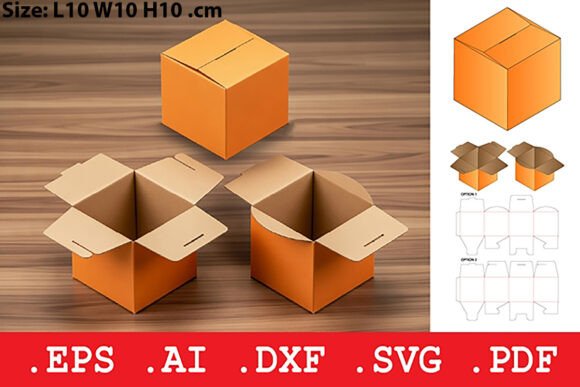
At its core, a Square Tuck Top Gift Box is a self-locking carton with a tuck-in lid on the top and an interlocking base. The square footprint makes it symmetrical and easy to arrange on shelves or in gift bags. The template is typically designed for medium-weight paperboard—usually between 200 and 350 gsm—which provides enough rigidity to hold its shape without becoming too difficult to fold by hand.
One of its distinguishing features is the adhesive-free assembly. The bottom uses a series of interlocking flaps that create a secure closure without tape or glue. The top simply tucks into the body, often with a slit or flap that keeps it closed under light pressure. This clean construction appeals to people who want a polished look while minimizing assembly time and mess.
The template also includes two distinct flap options for the internal fold. One may produce a slightly tighter closure, while the other allows for easier insertion of thicker contents. That small but meaningful choice lets you customize the fit depending on what you are packaging—loose tea sachets, handmade soaps, jewelry, or small cosmetic jars.
Where Does the Square Tuck Top Gift Box Shine?
This box style excels in scenarios where presentation matters but the weight of the contents remains low. If you are packaging items under about 100 grams—such as bath bombs, folded scarves, greeting card sets, or small candles—the structure holds up well. The clean geometric lines and the smooth surface created by the tuck-top lid give it a crisp, professional appearance without the added cost of rigid boxes.
It is also a practical choice for events. Wedding favor boxes, party treats, and corporate gift enclosures often need to be assembled in bulk. Because the Square Tuck Top Gift Box requires no adhesive, a single person can build dozens within an hour. The interlocking base pops into place with a few folds, and the lid closes securely in seconds. For organizers who value speed and consistency, this format reduces both labor and the potential for messy glue accidents.
Customization is another strong point. The digital template files—typically provided in DXF, SVG, EPS, PDF, and AI formats—mean you can adapt the design to your branding. A graphic designer can add logos, patterns, or cutout windows before sending the file to a laser cutter or digital die-cutter. For those using manual cutting, the PDF and print-ready versions maintain accurate proportions, so the box still fits together precisely even when cut by hand.
Understanding Material Constraints: The 200–350 gsm Range
The recommended paper weight of 200–350 gsm directly shapes how the box performs. At the lower end, 200 gsm stock is relatively thin and works well for very light items like tea bags, small notecards, or a few pieces of wrapped chocolate. The folding lines remain crisp, and the overall feel is delicate but neat.
Moving up to 300–350 gsm provides noticeably more structure. You can package slightly heavier items, and the box feels substantial in the hand. However, if you push beyond 350 gsm, the tuck top can become difficult to close smoothly. The flaps may resist folding cleanly without scoring, and the interlocking bottom might not lock as securely because the paper is too thick to slide into the slots without force. That’s why this format is not ideal for heavy, dense products—the lid could pop open or the bottom could loosen over time if the material is stressed.
For comparison, a rigid two-piece box commonly used for high-end cosmetics often starts at 800 gsm or more and includes a separate base and lid. That style can hold significantly heavier items and withstand repeated opening, but it also costs more and takes longer to assemble. The Square Tuck Top Gift Box sacrifices that extreme durability for ease of production and a lower material expense.
How the Interlocking Bottom Compares to Other Closure Types
Not all self-assembly boxes use the same bottom structure. The interlocking base found in this template is similar to what you might see on a standard foldable carton, but it has fewer tabs and relies on a symmetrical lock. Compared to an auto-lock bottom, which often uses curved slits and additional flaps, the Square Tuck Top Gift Box design is simpler. That simplicity means less chance of tearing during assembly, but it also means the bottom may not hold as much weight as a multi-tab lock would.
A glued base, by contrast, offers a flat, seamless look and excellent strength, but it requires dry time and careful alignment. For makers who value a completely clean interior—perhaps to line the box with tissue paper—a glued bottom might be preferred. Still, for a quick, adhesive-free alternative, the interlocking base strikes a reasonable balance.
The tuck top itself also has variations. Some boxes use a friction-fit slit, others a simple fold-over flap. The included two flap options for internal folding let you adjust how snugly the lid closes. If your product is slightly oversized, the less restrictive flap may prevent bulging. If you want a tighter seal, the alternative flap provides that. This adjustability is a small but thoughtful detail you won’t find in every template package.
Comparing the Square Tuck Top Gift Box with Common Alternatives
To decide whether this style fits your project, it helps to place it beside a few other popular formats without labeling any as inherently better.
Pillow boxes offer a curved, elegant shape and no separate base assembly. They work beautifully for small, tubular items like rolled scarves or bath salts tubes. However, they are less stable when standing upright and often require slightly thicker paper to hold their curve. If your display calls for a flat, stackable box, the Square Tuck Top Gift Box is far more practical.
Magnetic closure boxes add a premium tactile experience with a lid that snaps shut. They are wonderful for jewelry or electronics, but they typically involve a two-piece construction and a higher per-unit cost. Assembly is minimal because the magnets are pre-attached, but you lose the ability to print and cut everything in-house unless you have advanced equipment. The Square Tuck Top Gift Box template, with its wide range of included file formats, puts full control in the hands of the maker.
Two-piece setup boxes (base plus lid) offer a drawer-like opening and a luxurious feel. They are ideal for keepsake items and heavier gifts. But they require double the material and often need glue to secure the lid walls. For lightweight, high-volume needs—think sample giveaways or seasonal favors—the tuck-top style is more resource-efficient.
Gable boxes with handles add portability and a playful shape, but they occupy a different visual category. They are less formal and harder to stack. If a clean, minimalist look is the goal, the square format remains hard to beat.
File Format Flexibility and the Maker’s Toolkit
One underappreciated aspect of this template is the breadth of file types provided. A .DXF file means you can send the design directly to a CNC machine or a laser cutter, which is crucial for small production runs using thicker cardstock or chipboard. The .SVG format integrates with craft cutters like Cricut or Silhouette, allowing hobbyists to produce precise cuts at home without manually tracing. The .EPS file serves commercial printers who work with industry-standard vector software, and the .AI source file gives full access to layer structures and editing capabilities for those using Adobe Illustrator. Finally, the .PDF acts as a universal fallback for anyone who simply needs to print and hand-cut.
This multi-format approach means the Square Tuck Top Gift Box adapts to different workflows. A small cosmetics brand might commission a graphic designer to tweak the AI file and then send the EPS to a print shop. A wedding planner working on a tight timeline could use the PDF to print templates on decorative cardstock and cut with scissors. The flexibility reduces friction between digital design and physical output, which matters when you are comparing options that might only offer one or two file types.
When the Square Tuck Top Gift Box May Not Be the Best Fit
No single packaging solution covers every scenario. This style has clear limitations worth acknowledging. If your product is heavy—say, a ceramic coaster, a glass jar of preserves, or a thick stack of notebooks—the tuck top alone will not provide enough security. The weight could cause the lid to slip open during transport, and the interlocking base could gradually loosen. In such cases, a box with a separate lid and base, or one reinforced with an internal tray, is a safer choice.
If the packaging needs to withstand frequent opening and closing, such as for subscription box items that are examined and returned to the shelf, the tuck flap may eventually crease or fatigue. A hinged lid or a magnetic closure would hold up better over repeated use.
Also, if the box must be completely dust-proof or airtight, this design leaves small gaps at the corners and the tuck slit. It is not intended for long-term storage of perishable goods or items sensitive to humidity. For those requirements, a tin, a rigid box with a tight-fitting lid, or even a sealed pouch may be more appropriate.
Practical Scenarios: Making the Decision
Let’s ground these comparisons in a few realistic examples. A small-batch skincare brand wants to package their solid lotion bars. The bars weigh about 60 grams each and have a subtle botanical scent. The Square Tuck Top Gift Box, printed on 300 gsm textured paper, gives a natural, handcrafted feel that matches the brand. The interlocking base holds the bar securely, and the tuck top stays closed inside a shopping bag. The brand can use the AI file to add a small die-cut window, revealing the product through a thin layer of tracing paper. This becomes a strong, cost-effective packaging choice.
Now consider a different situation: a stationery designer is packaging a luxury fountain pen set. The pen and its accoutrements weigh nearly 200 grams, and the set will be shipped in the mail. Here, the tuck top box could be a risky option. A better alternative would be a two-piece rigid box with a foam insert, which prevents movement and protects the delicate nib. While the Square Tuck Top Gift Box could be scaled up to accommodate the pen, the weight and shipping stresses might cause the lid to open or the bottom to fail. Recognizing that gap saves time and money.
A third example: a wedding caterer needs 200 favor boxes for Jordan almonds. The boxes must be assembled the night before, cost little, and look uniform. The Square Tuck Top Gift Box template, cut from a lightly shimmering 250 gsm paper, fits perfectly. One person can fold 200 boxes in under two hours, fill them, and tab them closed without any glue. The square shape stacks neatly in a large basket, creating an attractive display. In this case, the box’s strengths align almost perfectly with the task.
Key Tradeoffs: Speed vs. Permanence, Elegance vs. Strength
Every packaging format involves tradeoffs. The Square Tuck Top Gift Box gives you speed and a clean aesthetic. You lose some structural muscle and the “unboxing” drama that a magnetic or ribbon-tied box provides. It is a practical, everyday luxury—not the ultimate statement piece, but a reliable option that elevates simple goods above a plain bag or wrap.
For e-commerce sellers, the flat-pack nature of this template reduces shipping volume before assembly. You can store hundreds of pre-cut blanks in a drawer. Compare that to rigid boxes, which ship fully formed and consume warehouse space. The cost savings can be significant if you are operating from a small studio or home office.
However, if your brand is built entirely on a premium unboxing experience, the tuck top might feel too understated. The subtle friction of sliding a magnetic lid off a base, or the soft crinkle of tissue paper inside a deep two-piece box, creates a sensory layer that a tuck flap cannot match. That doesn’t mean the Square Tuck Top Gift Box is inferior; it simply belongs to a different category of user expectations.
Tips for Getting the Most from This Template
If you decide to go ahead with the Square Tuck Top Gift Box, a few practical adjustments can improve results. First, test your chosen paper weight thoroughly before committing to a large run. Score the fold lines if your material is at the upper end of the range—this prevents cracking on the printed surface. Second, use the two flap options to dial in the closure tension; try both on scraps first. Third, consider adding a lightweight insert or paper liner if the product has sharp edges that might catch on the tuck slit over time. None of these steps add much cost, but they can extend the box’s functional life.
The variety of downloadable formats also means you can experiment without specialist equipment. If you own a simple craft cutter, start with the SVG file on light cardstock. If you plan to outsource production, the EPS and AI files give manufacturers everything they need. The .DXF option is particularly useful for makerspaces with laser cutters, enabling crisp cuts on felt, thin wood veneer, or even acrylic for decorative outer sleeves that slide over the box—a hybrid approach that blends this template with other materials.
Decision Factors at a Glance
Rather than framing this as a simple yes or no, consider what matters most for your specific project:
- Product weight and fragility: Under 100 g and non-fragile? The Square Tuck Top Gift Box works well. Over 150 g? Consider a sturdier or two-piece alternative.
- Assembly volume: High volume and limited time favor an adhesive-free design like this one. Low volume and maximum luxury might justify a glued format.
- Display and stacking: Flat, square tops are easy to stack. Odd-shaped boxes may be eye-catching but harder to arrange in multiples.
- Customization needs: Access to source files (.AI, .SVG) allows deep customization. If you only need a standard layout, some ready-made boxes skip that step.
- Sustainability: Single-material paperboard is easier to recycle if you avoid lamination. The lack of glue also helps the box break down cleanly in recycling streams.
By weighing these factors, you can see whether the Square Tuck Top Gift Box aligns with your practical requirements and brand aesthetics. It is not a one-size-fits-all solution, but in the right context it offers an efficient, elegant way to package goods without unnecessary complexity.
Ultimately, the value of any template lies in how well it bridges the gap between your idea and the physical object your customer receives. The Square Tuck Top Gift Box template, with its clean geometry, dual flap options, and broad file support, remains a thoughtful option for many lightweight retail and gifting applications. Understanding where it excels and where it falls short gives you the confidence to choose wisely—whether you end up using this design or exploring a different packaging path altogether.