The Journey of Punch the Monkey: A Story of Resilience and Social Bonds
In the heart of Ichikawa City Zoo, a remarkable story of survival and adaptation unfolded in the summer of 2025. It is a narrative that goes beyond simple animal care, touching on themes of motherhood, environmental stress, and the innovative methods used to foster healthy development in young animals. The subject of this story is Punch, a Japanese macaque whose challenging start to life and subsequent journey to integration provides a fascinating window into primate behavior and modern zoo management practices.
The Birth and Early Abandonment of Punch the Monkey
Punch, a male Japanese macaque, was born on July 26, 2025. His name pays homage to Monkey Punch, the legendary creator of the Lupin the Third series, adding a touch of cultural reference to his identity. Unfortunately, Punch's life began with immediate hardship. Shortly after his birth, he was abandoned by his biological mother. This event, while distressing, is not uncommon in primate populations, both wild and captive.
Understanding Maternal Abandonment in Primates
Experts at the zoo attributed the abandonment to a combination of critical factors. The mother's age, her overall health, and potentially her inexperience in rearing offspring can all play a role. Furthermore, a significant environmental stressor coincided with Punch's birth: a severe heatwave. Such extreme weather events can compromise the health of a newborn and increase stress levels in the mother, potentially disrupting the crucial bonding process. This confluence of internal and external pressures likely led to the decision by Punch's mother to reject him, leaving the vulnerable infant to face the world alone from his very first day.
The Critical Role of Hand-Rearing and Human Care
From his second day of life, Punch's survival depended entirely on human intervention. Two dedicated zookeepers embarked on the intensive process of hand-rearing him. This involves mimicking the care a natural mother would provide, including round-the-clock feeding, warmth, and comfort. Hand-rearing is a delicate and time-consuming practice, but it is a vital tool in zoos for ensuring the survival of rejected or orphaned infants. It represents a direct, hands-on application of zoological expertise and compassion, embodying the zoo's commitment to individual animal welfare.
The goal of such intervention is never to keep the animal permanently separated from its species. Instead, it is a bridge—a means to provide the foundational health and strength needed for eventual reintroduction to a social group. For Punch, this period was his foundational "infancy," where his basic physical needs were met and his initial trust in caregivers was established.
The Challenge of Social Integration: Monkey Mountain
After months of careful nurturing, Punch was ready for the next, and perhaps most challenging, phase of his development: social integration. On January 19, 2026, he was introduced to the other macaques in the zoo's Monkey Mountain enclosure. For a hand-reared juvenile, this transition is fraught with difficulty. He entered a complex social hierarchy with established relationships and behaviors he had not learned naturally.
Initial reports indicated social struggles. Punch had to learn the language of his species—communication through gestures, vocalizations, and social cues—from scratch. He needed to find his place without the protective guidance of a biological mother. This phase tested not only his social skills but also his mental fortitude.
A Surrogate Mother: The Innovative Use of a Djungelskog Plushie
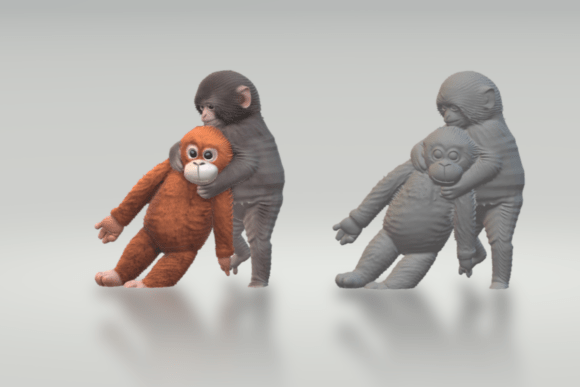
To support Punch through this turbulent integration period and aid his overall psychological and physical development, the zookeepers employed a creative and empathetic tool: a Djungelskog orangutan plushie from IKEA. This soft toy was introduced as a surrogate mother figure. The concept leverages the natural tendency of young primates to seek comfort and security through attachment.
Punch quickly bonded with the plush orangutan. It became a source of emotional solace and a transitional object, providing him with a sense of safety and companionship in the unfamiliar and sometimes intimidating group environment. This practice highlights how modern animal care blends deep behavioral understanding with simple, practical solutions. The plushie acted as a psychological anchor, allowing Punch to gradually explore his social world without feeling completely alone.
Observing Progress and Growing Independence
The success of Punch's journey is measured in observable milestones. By February 23, 2026, the zoo reported promising progress. Punch was beginning to interact directly with other monkeys and started eating independently—key indicators of growing confidence and acceptance within the group. These skills are fundamental for his long-term survival and well-being within the troop.
A further significant milestone was noted by March 5, 2026. The spirited little macaque had significantly reduced his attachment to his Djungelskog plush toy. More importantly, he was actively socializing with adult monkeys. This reduction in dependency on the surrogate signifies a healthy transfer of attachment to living members of his species. It demonstrates his evolving social competencies and his mental resilience in adapting to his natural social structure.
The Broader Significance and Modern Relevance
The story of Punch the Monkey is more than an isolated case study. It offers profound insights applicable to broader contexts, including our understanding of child development, social integration, and the impact of environmental stress.
Parallels in Human and Animal Development
Punch's need for a surrogate comfort object mirrors concepts in human child psychology, such as the use of transitional objects (like a favorite blanket or toy) to manage anxiety and foster independence. His struggles with social integration after a non-traditional upbringing reflect challenges faced by anyone entering a new social group without prior cultural knowledge. His story, therefore, serves as a natural example of cross-species behavioral principles, making complex developmental topics more approachable and understandable for general readers.
Climate Impact and Animal Welfare
The role of the heatwave in Punch's early abandonment is a crucial point. It directly connects animal welfare to contemporary issues of climate change and environmental stress. Extreme weather events are increasing in frequency and intensity, impacting wildlife reproduction and maternal behavior. This aspect of Punch's story clarifies a common misunderstanding: that abandonment is solely a matter of individual mothering failure. Instead, it highlights how external, environmental factors can critically influence natural processes, a relevant concern for conservation efforts worldwide.
Innovation in Care and Management
The use of a common IKEA toy in a specialized zoological setting illustrates how modern solutions can be simple, affordable, and effective. It shows that expertise (E-E-A-T) in animal care isn't just about high-tech medicine; it's also about creative thinking and understanding emotional needs. This approach fits seamlessly into modern life, where interdisciplinary thinking—combining behavioral science, retail products, and compassionate care—solves complex problems. For businesses, educators, and creatives, it's an example of innovative problem-solving under constraints.
Conclusion: A Narrative of Hope and Adaptation
Punch the Monkey's journey from a heatwave-born, abandoned infant to a socializing member of Monkey Mountain is a testament to resilience. It underscores the importance of dedicated care, behavioral science, and adaptive management in wildlife conservation and zooology. His story helps readers build a broader understanding of the intricate bonds between environment, motherhood, social learning, and individual perseverance.
As Punch continues to grow and interact with his troop, his early life will remain a powerful case study. It demonstrates that with informed intervention and supportive tools, even the most vulnerable individuals can find their place in the social tapestry. For the general reader, it is an engaging, educational tale that makes the complex world of primate behavior and animal care both clear and deeply significant.